
One site, one source of truth,
from drawing to defect.
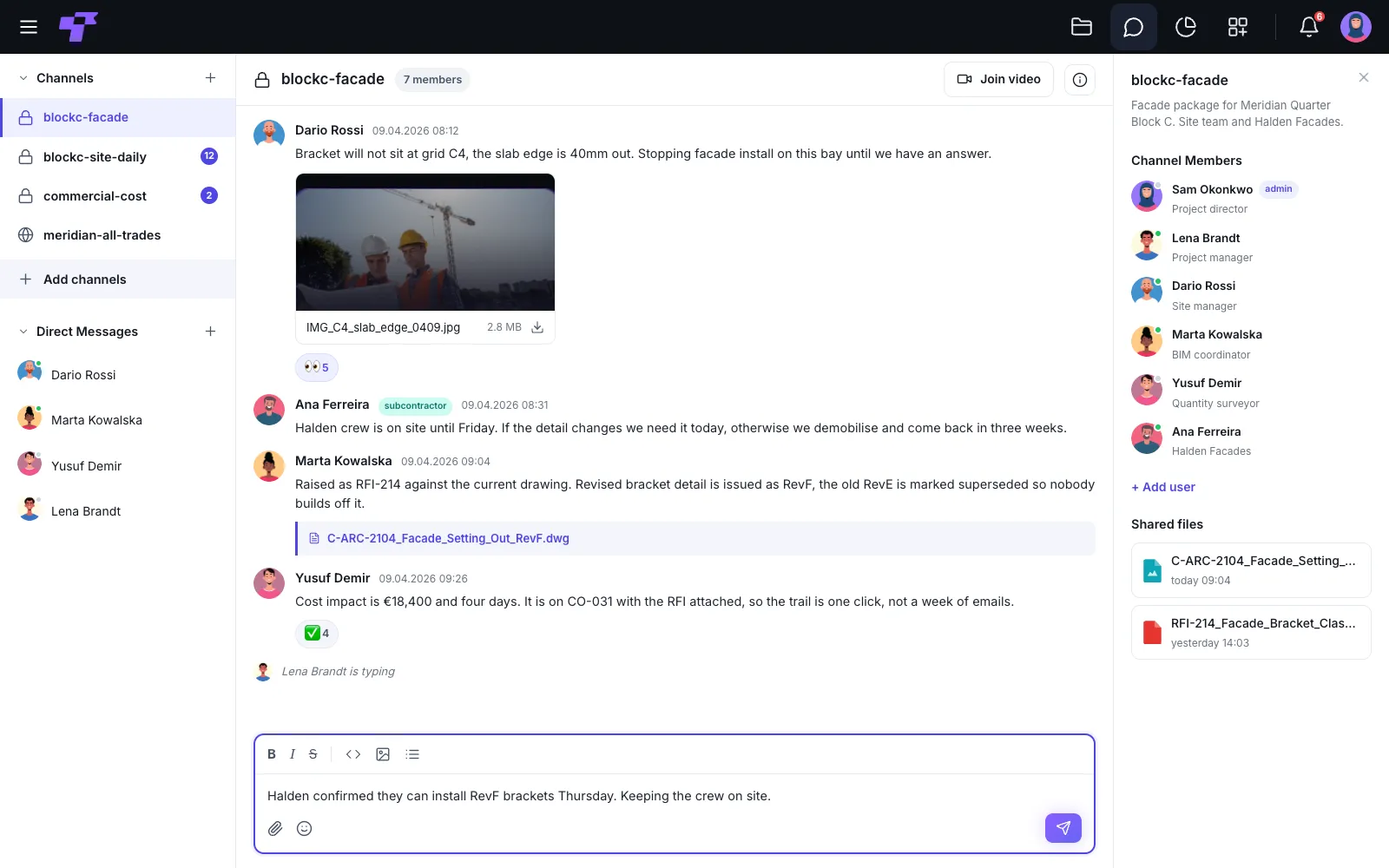
An €18,400 bracket clash sat unresolved for four days because nobody could agree which drawing was actually the current one.
Twigex replaces scattered BIM tools, spreadsheets, and email threads with one connected record per project, so tracing a clash back to the right drawing and the right person takes minutes, not a week of digging.
What's actually going wrong today.
Design, cost, schedule, and site data all live in different systems, BIM tools, spreadsheets, email, and site apps, that don't talk to each other.
When a defect or cost overrun happens, figuring out who's responsible can take days, because there's no single place to check the facts.
AI tools bolted onto this mess mostly fail, because AI needs clean, connected data to work with, and most construction data isn't set up that way yet.
Built for how construction teams actually work.
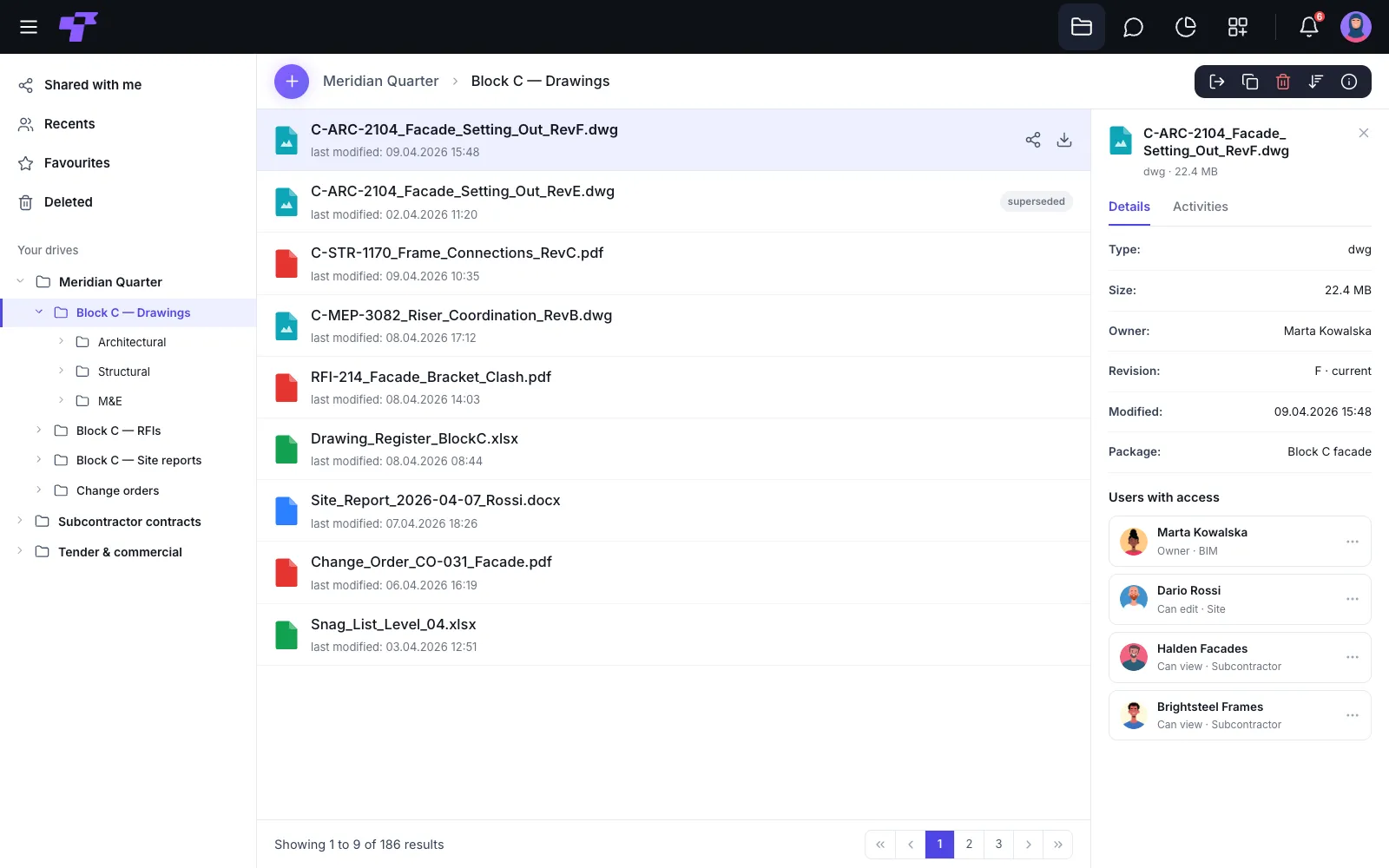
The current facade drawing is the only one anyone can build from. The old version is marked automatically, not tracked in someone's inbox.
A bracket clash photographed on site becomes a numbered RFI, linked to the exact drawing, with cost and schedule impact confirmed in the same thread, not a week of separate emails.
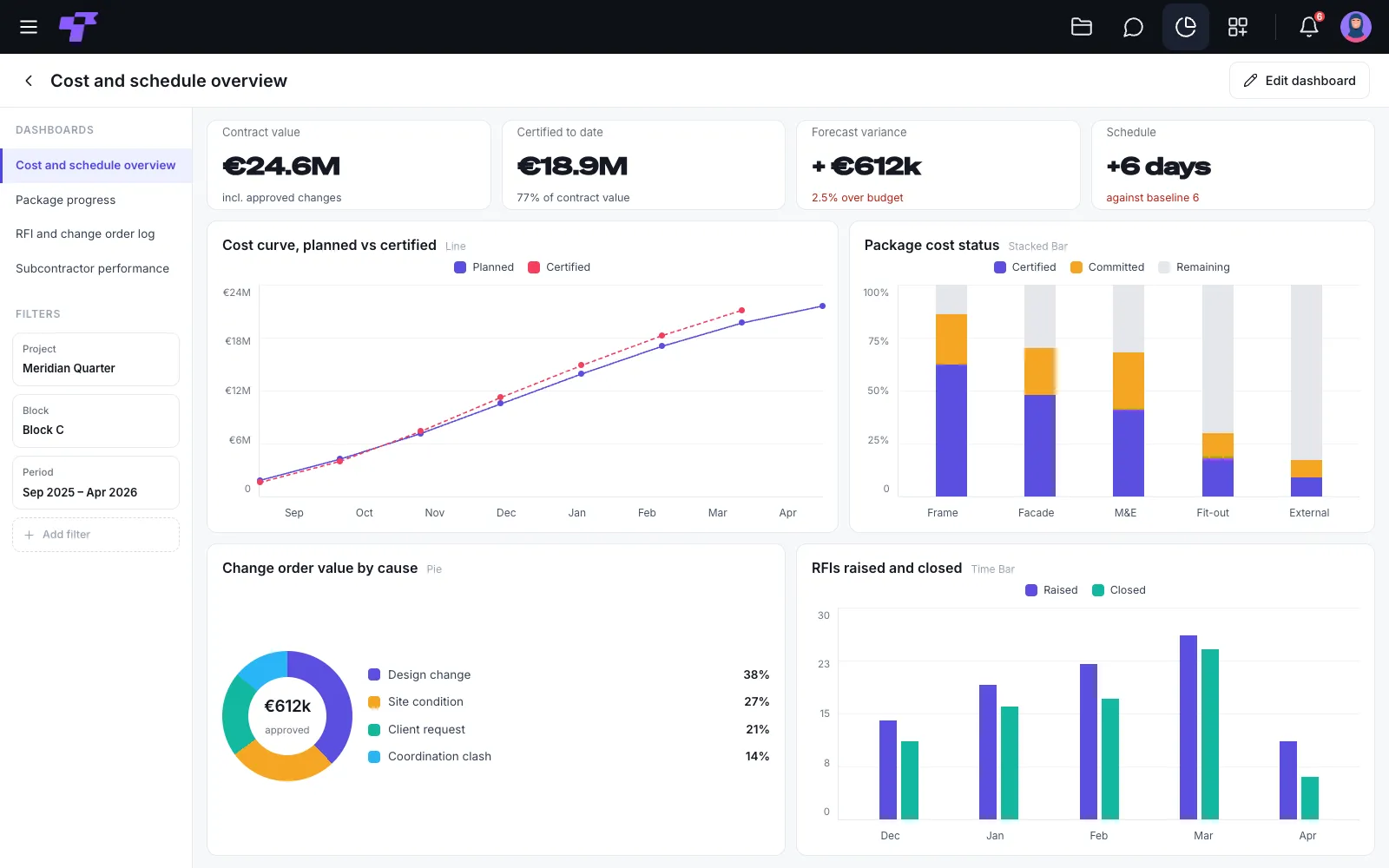
Cost variance, RFI turnaround, and change order costs update live against the contract, instead of a spreadsheet someone reconciles once a month.
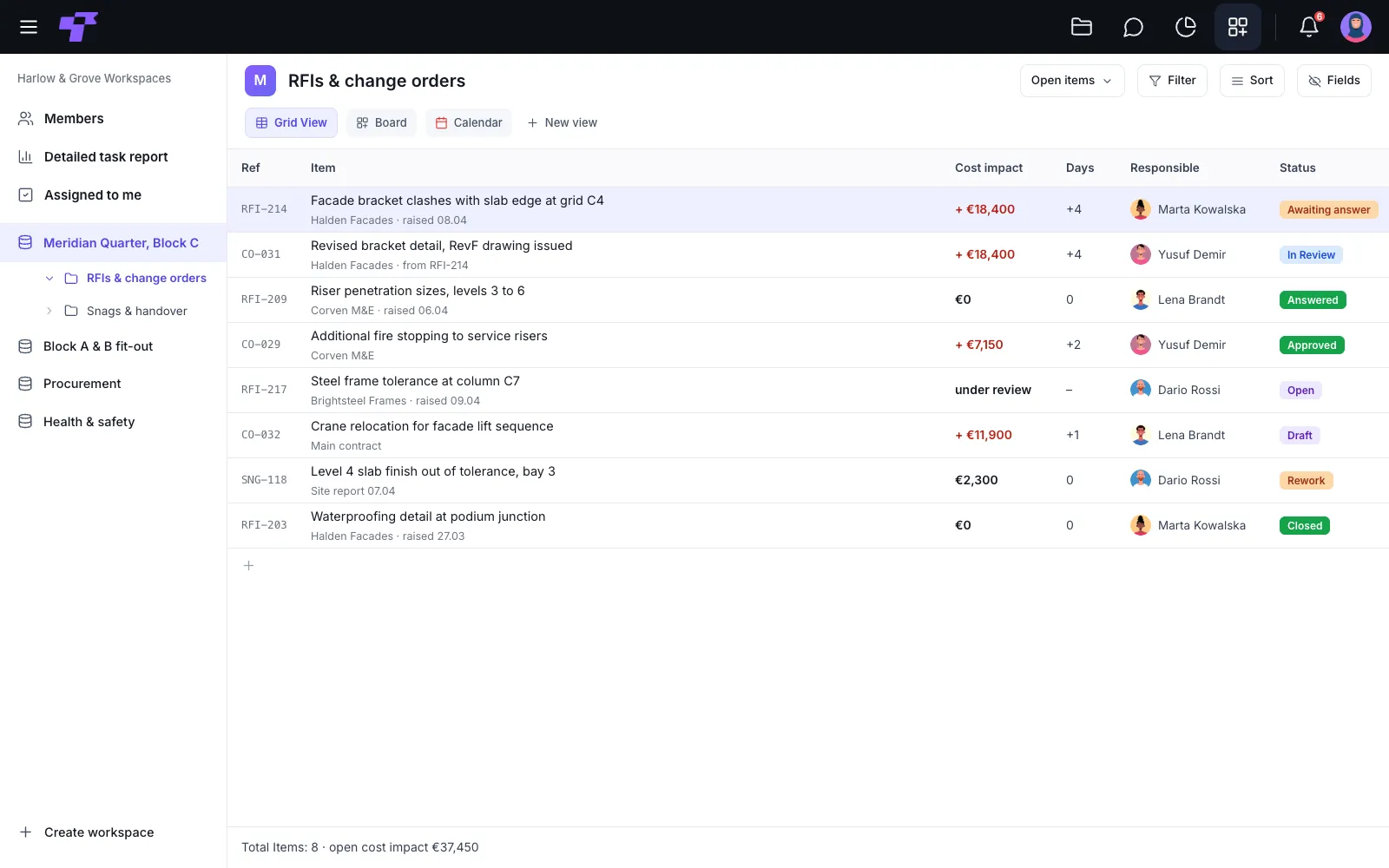
An RFI and the change order it produces sit on the same line, with cost impact, schedule impact, and an owner, so accountability never gets lost between systems.
The industry doesn't lack AI tools, it lacks connected data. Scattered data is the real bottleneck, and it's the thing most construction firms still haven't fixed.
Here's how Twigex fixes it.
See it working in your sector.
Talk to our team about your specific compliance requirements and deployment constraints.