

Sovereignty is not optional anymore,
and NIS2 proves it.
A control-room laptop pointed at a data center in another country is exactly the kind of dependency regulators are now naming in enforcement actions.
Twigex runs on infrastructure you choose, on premises, in your private cloud, or on a regional cloud that stays within your own borders, so operational data never has to leave the zone it's regulated in.
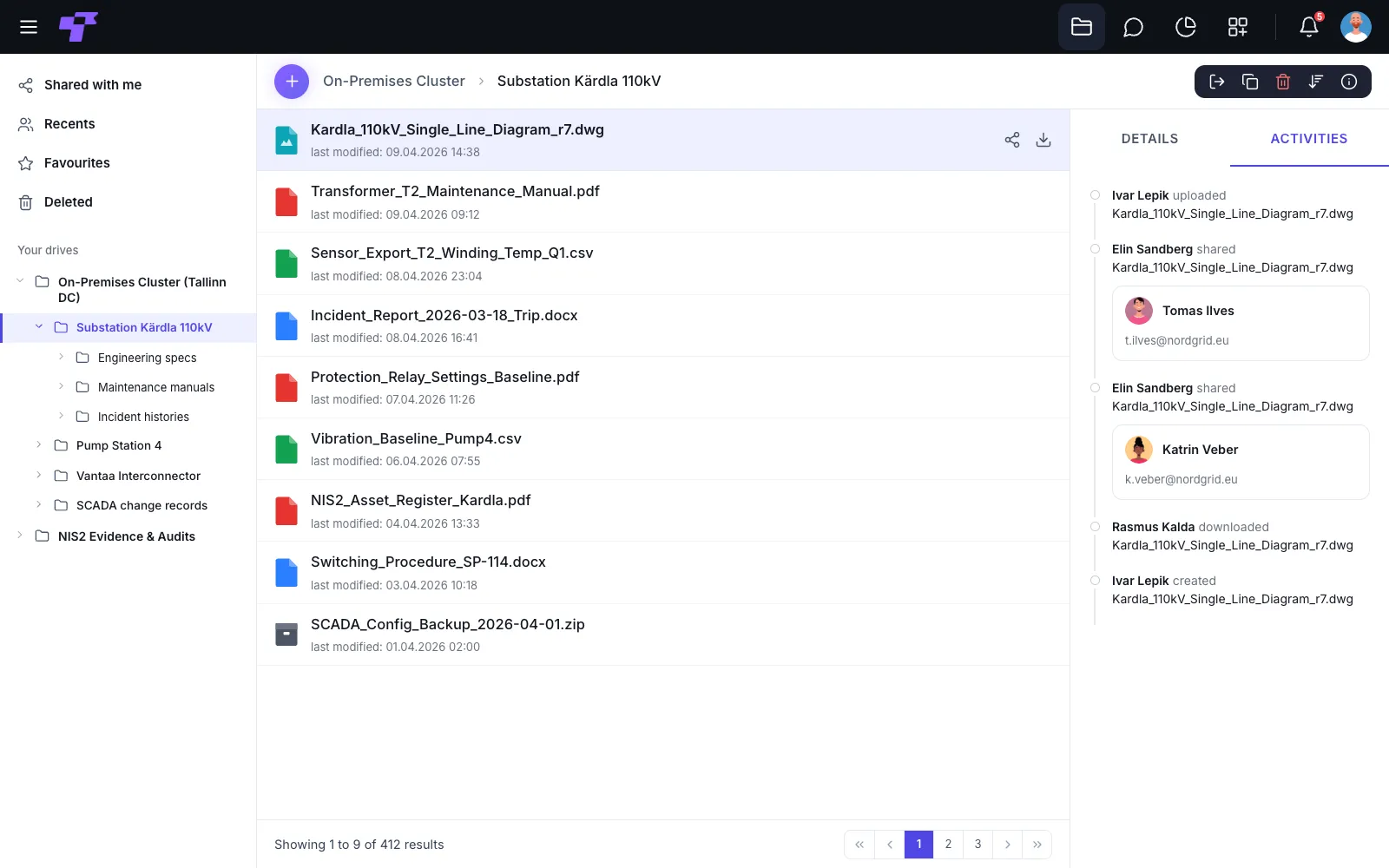
What's actually going wrong today.
Operational data often sits on cloud platforms hosted in another country, exactly the kind of dependency regulators now warn creates a governance risk.
NIS2 enforcement is no longer theoretical. Regulators are already issuing penalties across the EU, with fines of up to €10 million or 2% of global turnover for non-compliance.
Engineering specs, maintenance manuals, and incident histories, years of institutional knowledge, sit locked in archives nobody can search, right when AI could unlock them. The catch: that data legally can't leave the country or the security perimeter.
Built for how critical infrastructure teams actually work.
Engineering specs, maintenance manuals, and incident histories sit in one on-premises cluster, searchable instead of locked in an archive nobody opens.
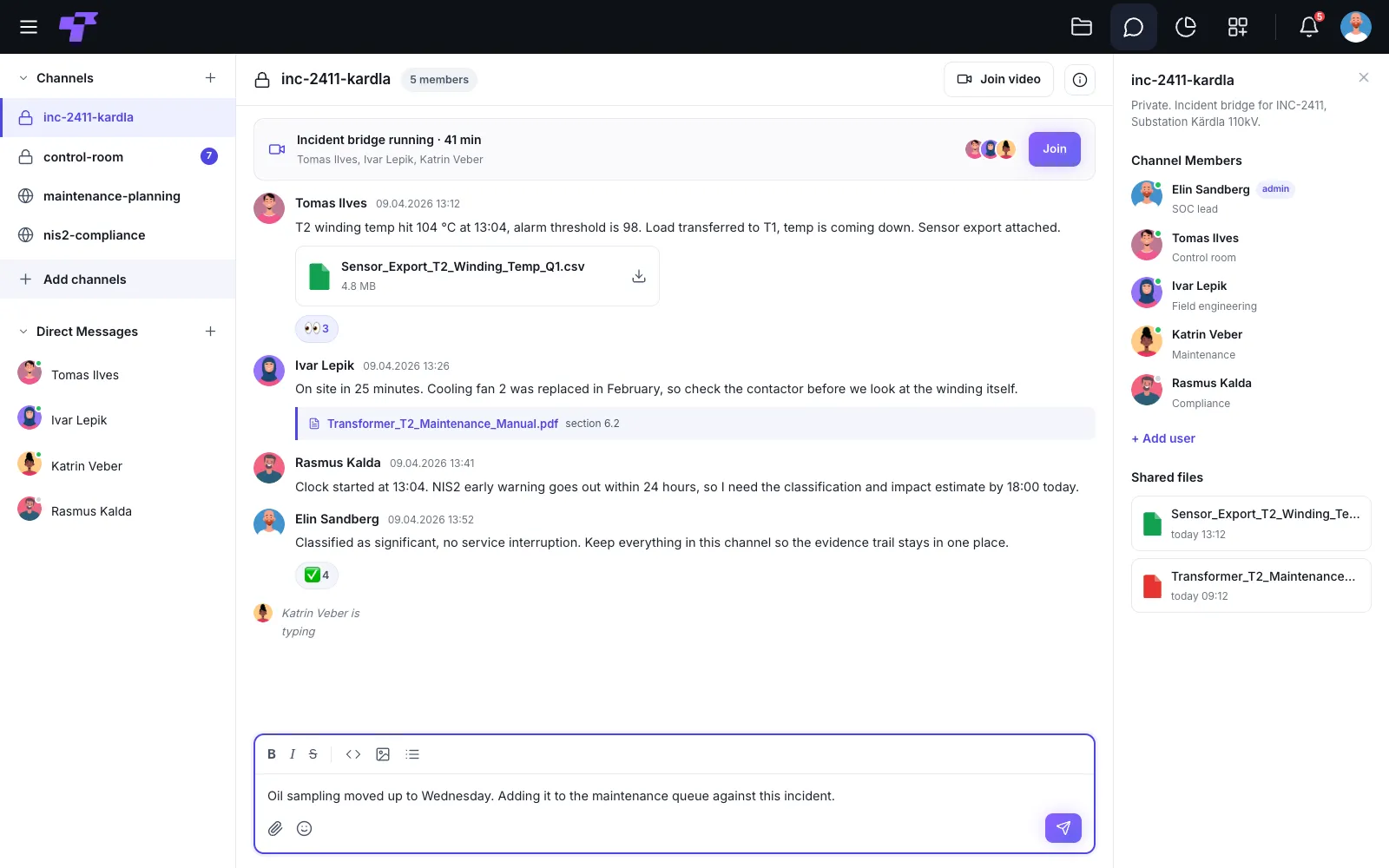
The response team classifies the incident, cites the exact manual section, and starts the NIS2 notification clock, all inside one channel that becomes the evidence trail.
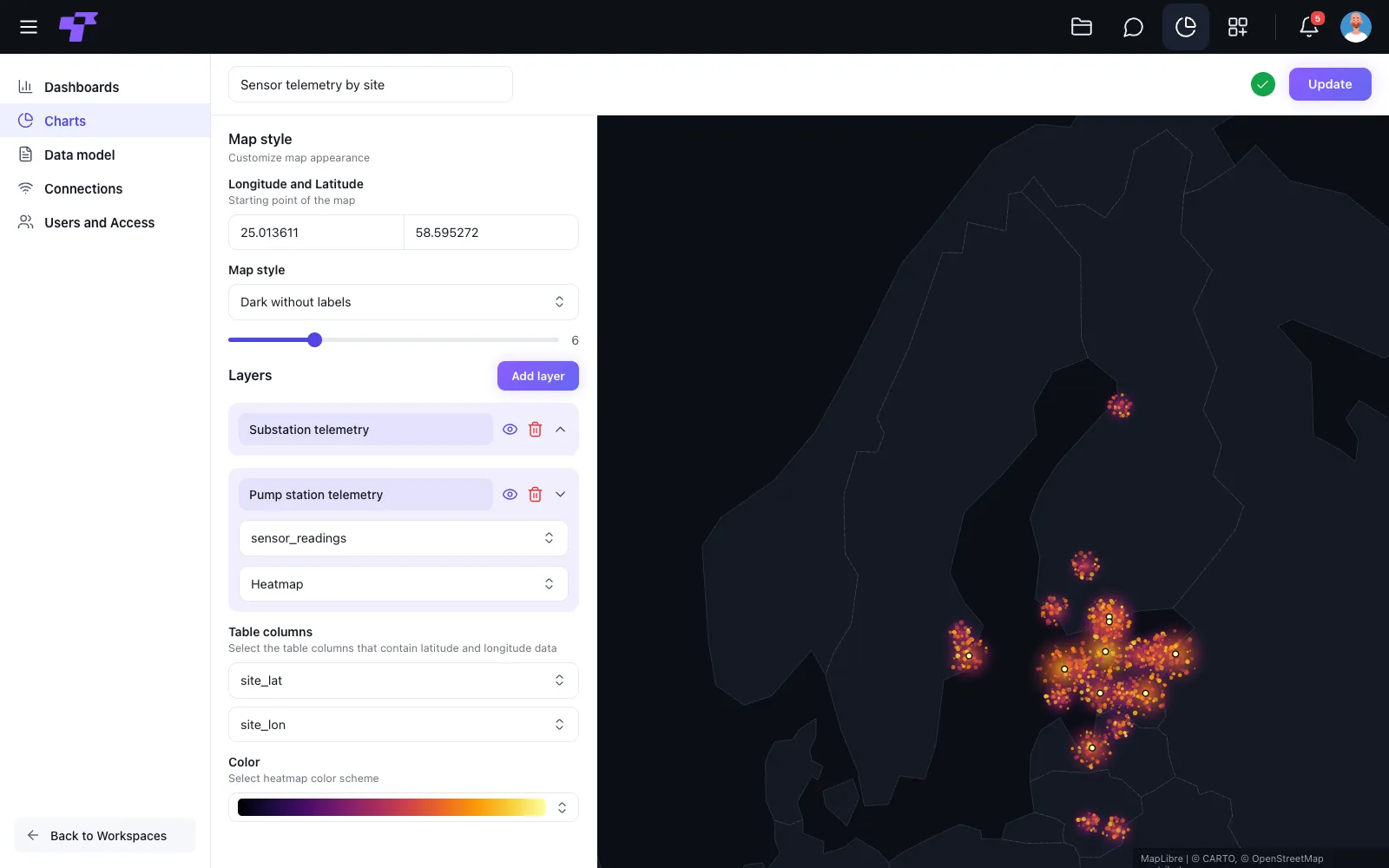
Substation and pump-station telemetry feeds straight into a live map, so field engineers see where load and risk are building up in real time.
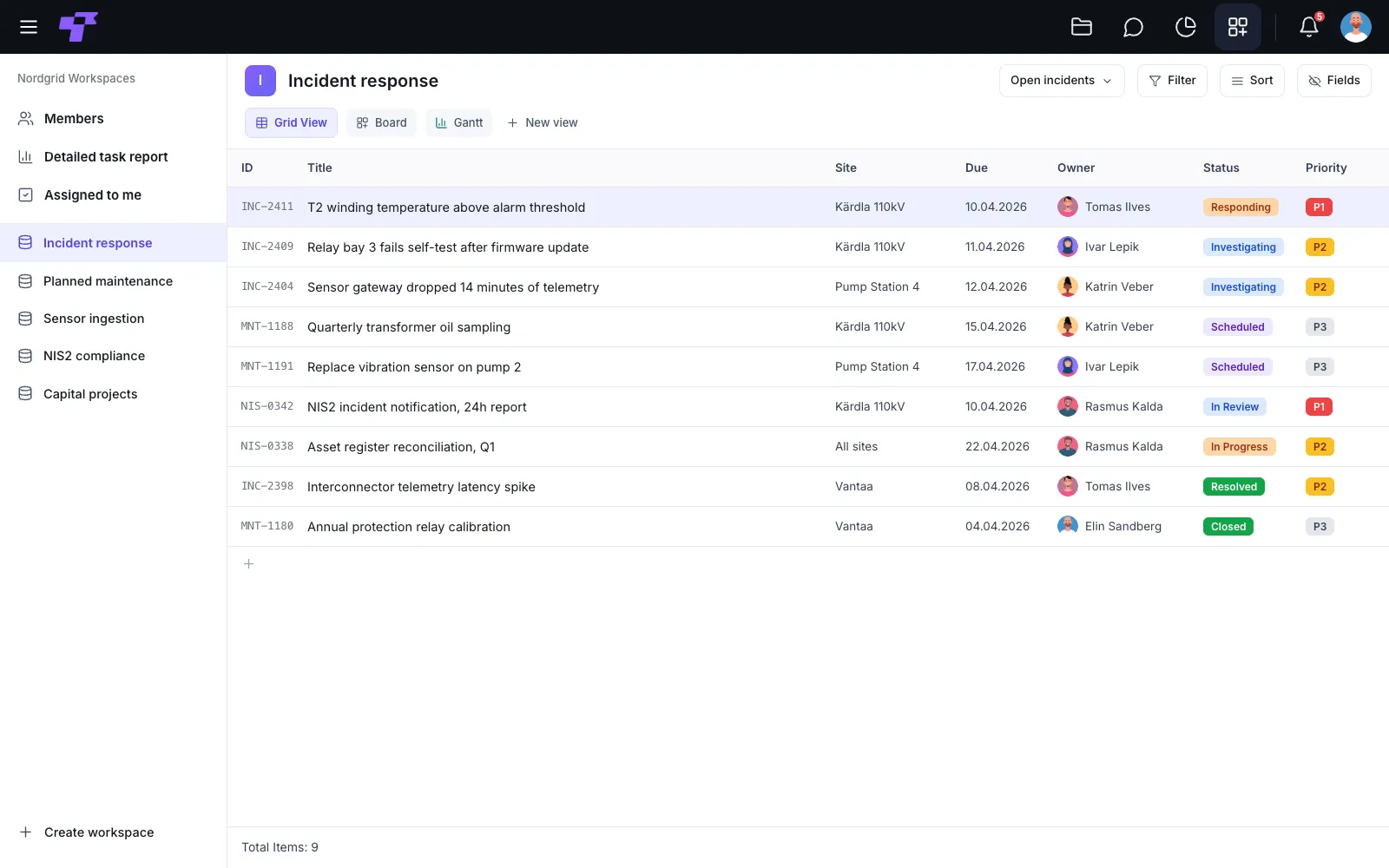
Incidents, planned maintenance, and NIS2 filings sit in one prioritized queue instead of three separate systems nobody fully trusts.
With NIS2 audits due and enforcement already active in 2026, operators need to show a compliance and data-sovereignty setup that actually works, not just a policy document.
Here's how Twigex fixes it.
See it working in your sector.
Talk to our team about your specific compliance requirements and deployment constraints.