

Privilege only holds
if confidentiality does.
Discuss a settlement position in the wrong tool, and the other side's lawyers can ask for it, and get it.
Twigex keeps case files, client messages, and firm data on infrastructure you control. Nothing that touches a case ever passes through an outside AI provider's hands.
What's actually going wrong today.
A federal court has already ruled that a firm can lose privilege, the legal protection over confidential case communications, if a public AI tool's terms of service let the provider keep or reuse what you typed in. Most consumer AI tools work exactly that way.
Type party names, case facts, or a negotiation position into a public AI tool, and you may have just disclosed them, whether you meant to or not.
New EU AI Act rules require a human to oversee AI decisions and proper control over the data behind them. That's pushing firms to rethink which AI tools are actually safe to use for research, document review, and contract work.
Built for how legal teams actually work.
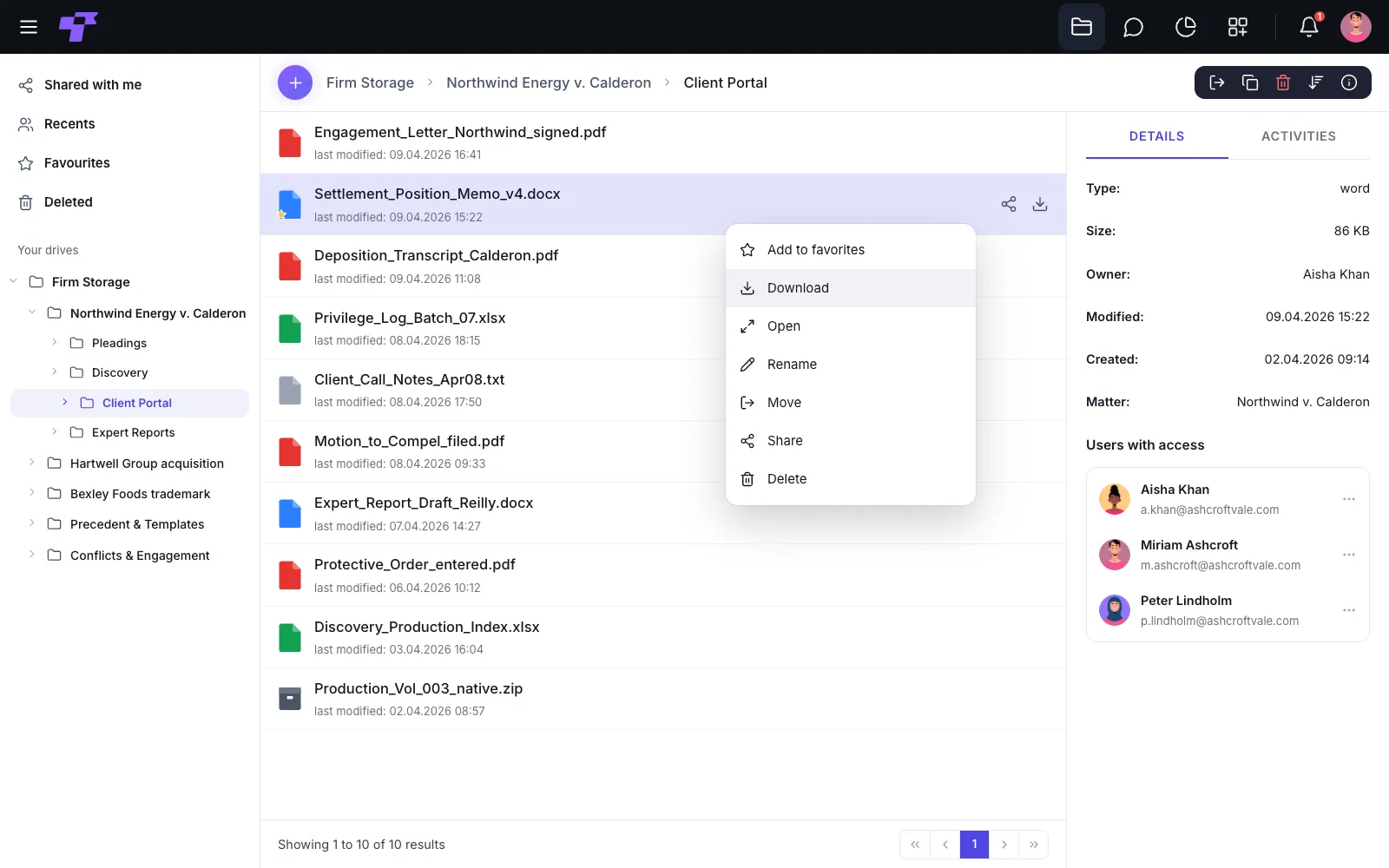
Pleadings, discovery, and a client-facing portal sit inside the same firm-controlled workspace, not scattered across email attachments and a consumer file-sharing link.
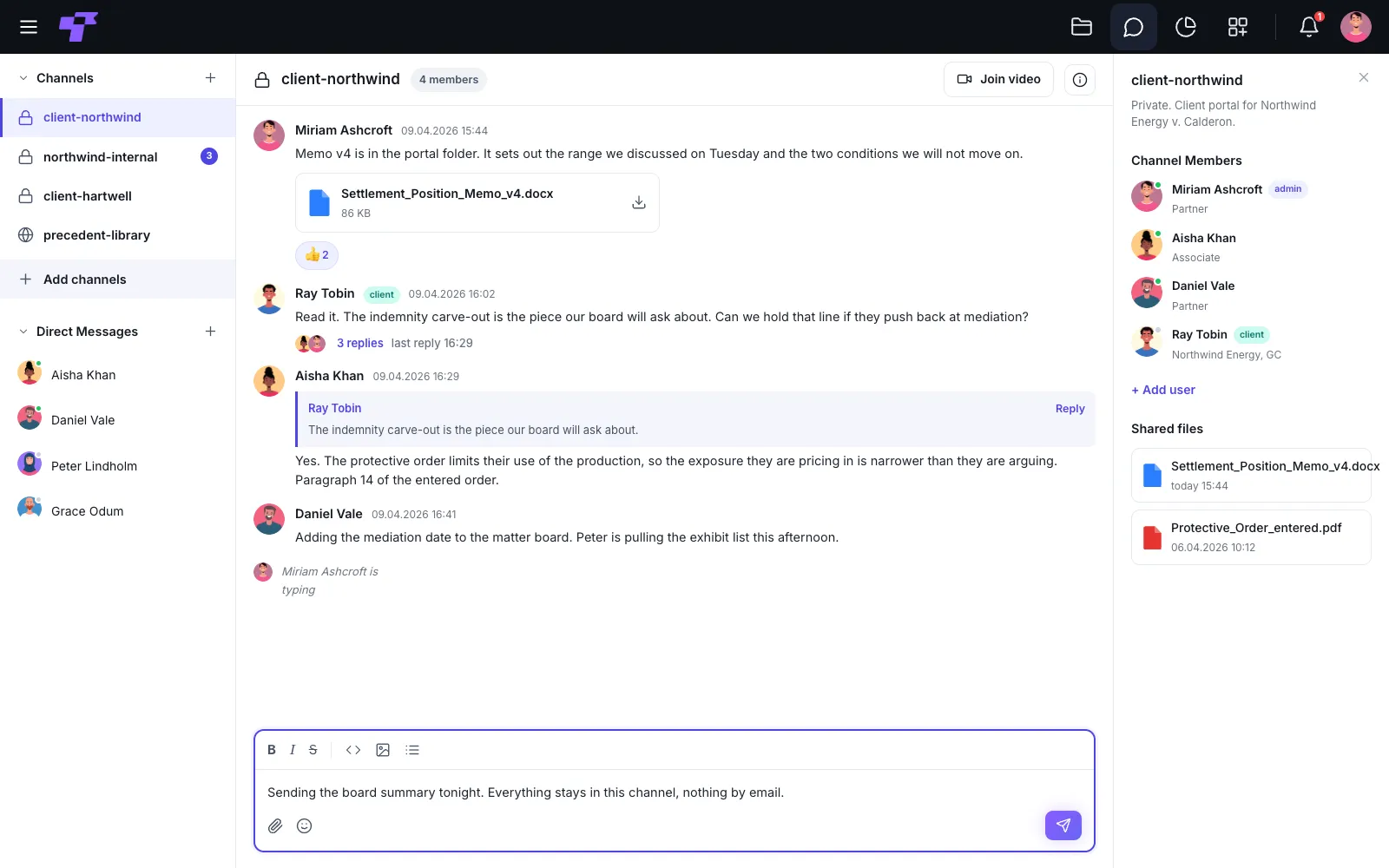
Outside counsel and the client's general counsel work in the same private channel, backing up positions with a citation to the exact paragraph of the order, not just a paraphrase.
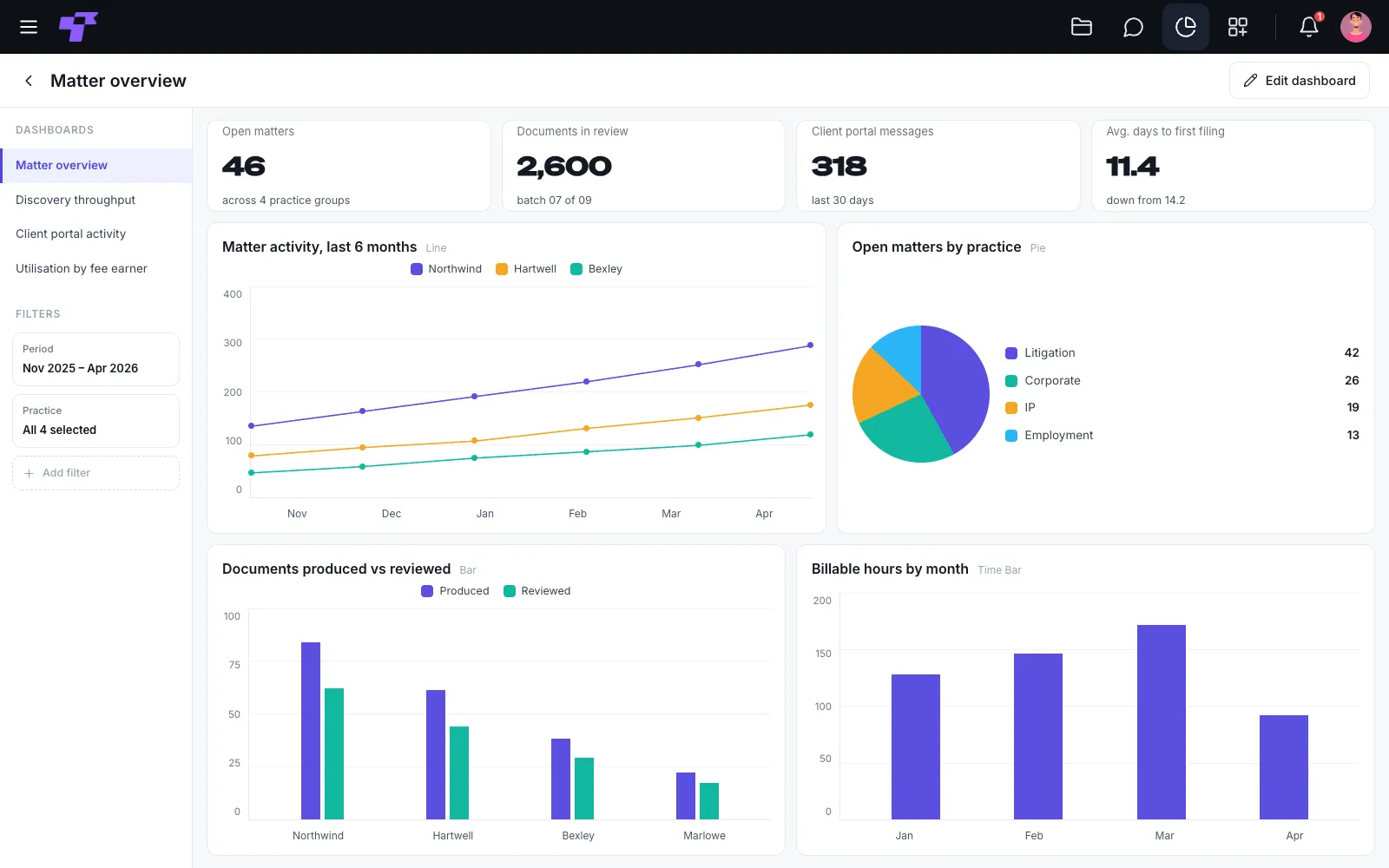
Partners see open matters, billable hours, and how fast discovery is moving, straight from firm data, without sending anything through an outside analytics vendor.
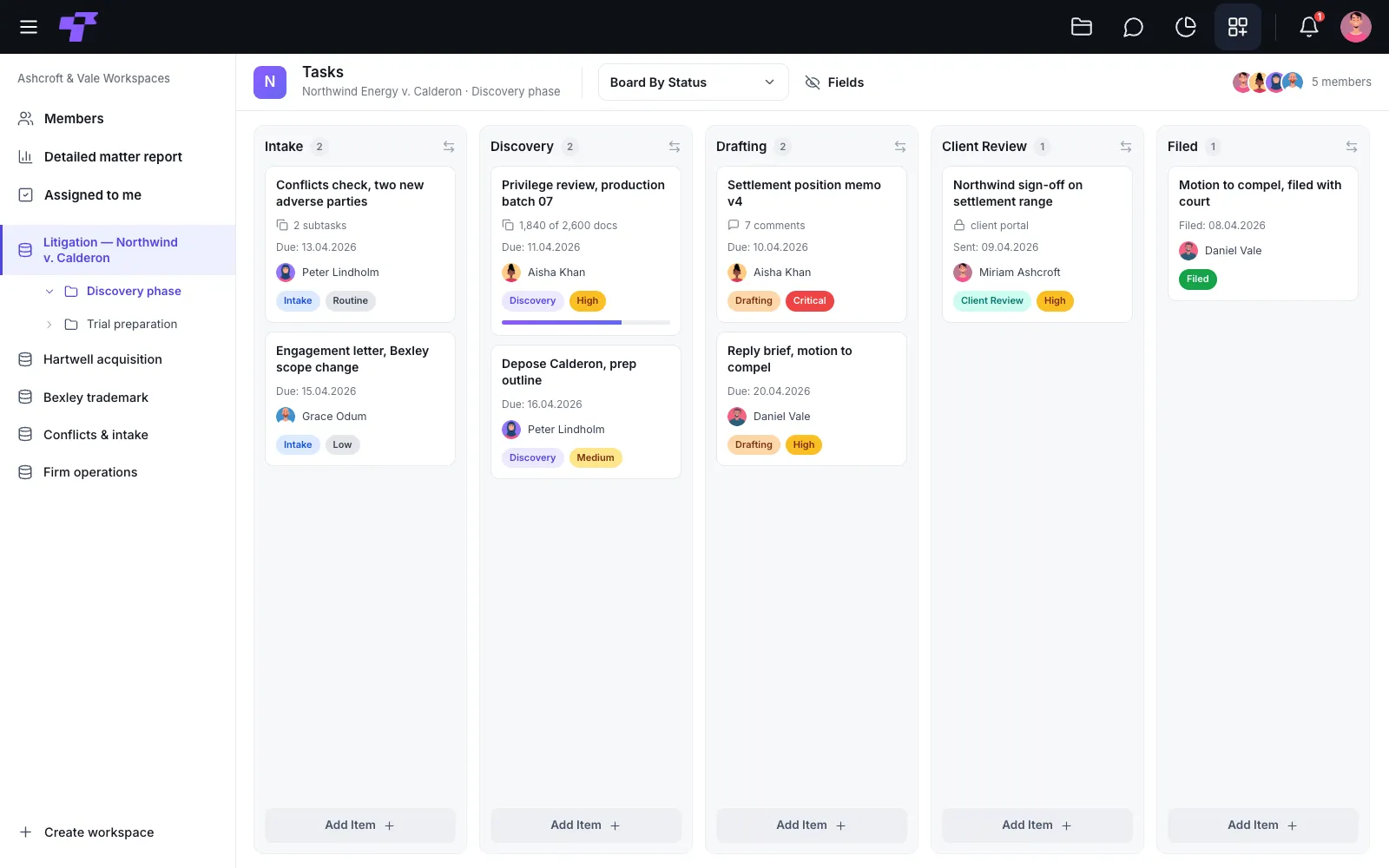
Every task on a matter, from the conflicts check to the motion filed with the court, moves across one board the whole team can see.
Courts are actively deciding how much privilege firms lose by using public AI. The safest answer is AI that never leaves your own infrastructure in the first place.
Here's how Twigex fixes it.
See it working in your sector.
Talk to our team about your specific compliance requirements and deployment constraints.